Vector Medical Icon Set
A Designer’s First Look: Clean, Calm, and Quietly Confident
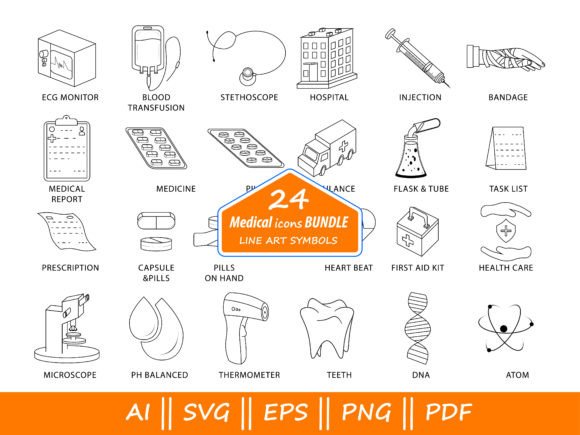
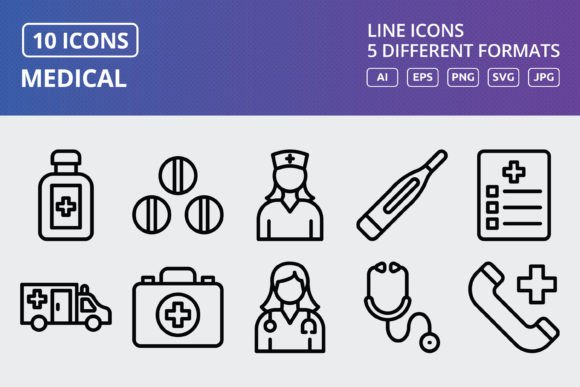
When I opened the Vector Medical Icon Set, my first thought wasn’t “clinical” or “cold”—it was “calm authority.” These aren’t cartoonish stethoscopes or overstyled heart icons. They’re balanced, gently rounded, with intentional negative space and consistent stroke weight. The set includes symbols like a cross, caduceus, heartbeat line, medical bag, syringe, and nurse’s cap—each drawn with restraint and clarity. That matters immensely in embroidery. Too much detail becomes muddy under thread; too little feels generic. This set lands right in the middle: simple enough to stitch cleanly at 2–3 inches, detailed enough to read instantly on a tote bag or baby onesie.
Real Project Test: Embroidering a Nurse-Themed Tote for a Local Clinic Gift
Last week, I used three icons from the Vector Medical Icon Set to create a custom embroidered tote for a pediatric clinic’s staff appreciation day. I chose the heartbeat line (scaled to 2.5″ wide), a subtle cross, and a small nurse’s cap—arranged asymmetrically along the bottom hem. Because the icons are true vector files (SVG, EPS, AI), I resized them without pixelation or distortion—critical when adjusting for fabric drape and hoop constraints. On medium-weight canvas, the outlines translated beautifully into clean satin stitch borders, and the open areas held up well as fill stitch zones with moderate density. No floating threads, no skipped stitches—even on the curved edge of the heartbeat line.
Where It Shines—and Where to Pause
The Vector Medical Icon Set excels in projects where professionalism meets warmth: embroidered sweatshirts for hospital volunteers, linen tea towels for wellness studios, cotton aprons for holistic practitioners, or soft pillow covers for NICU family lounges. Its neutral tone works equally well on light and dark fabrics—especially when paired with muted thread colors like heather gray, slate blue, or warm oat.
But here’s what I watched closely:
- Small hoop sizes (under 4″): The syringe and caduceus have fine vertical elements. At under 1.5″ tall, those lines risk stitching too close together—test on scrap first and consider simplifying minor strokes if needed.
- Textured or stretchy fabric: On terry cloth towels or ribbed knit baby caps, I added lightweight tear-away stabilizer *beneath* and a light film topping—this kept the icon edges crisp without puckering.
- Dense stitch areas: Avoid clustering more than two icons within a 3″ radius on thin cotton. Fill stitch density builds heat and bulk; spacing gives breathing room for wash durability.
- Curved surfaces (like caps): The cross and heartbeat line adapted smoothly—but the medical bag’s handle detail softened slightly. For headwear, I’d simplify that curve manually before digitizing.
What It Adds to Your Finished Product—Beyond the Stitch
Using the Vector Medical Icon Set doesn’t just add decoration—it adds intention. Customers recognize calm, thoughtful design. A personalized baby onesie with the nurse’s cap icon reads as tender, not trendy. A boutique sweatshirt with the heartbeat line feels grounded—not gimmicky. That perception lifts perceived value, supports brand consistency for clinics or wellness brands, and makes handmade products feel intentionally curated, not assembled.
I’ve seen Etsy sellers use these icons in printable mockups for digital embroidery files—and they convert well because the clean lines render sharply even in low-res previews. For craft fair shoppers, the simplicity reads clearly from three feet away. And for commercial embroidery shops? These icons scale reliably across orders—from single-name patches to bulk-embroidered staff uniforms—without redesigning each time.
Practical Notes Every Embroidery Designer Should Keep Handy
Before you drop the Vector Medical Icon Set into your next project, take five minutes to:
- Test on scrap fabric—same type, same stabilizer, same thread count you’ll use on the final piece.
- Check thread color contrast on both light and dark backgrounds. Some icons (like the cross) rely on silhouette—avoid near-matching thread/fabric combos.
- Review stitch density in fill areas. Vector files don’t include stitch data—you’ll need to digitize or use an auto-digitizing tool. Watch for overly tight fills on small icons.
- Confirm hoop size compatibility. Even though the icons scale infinitely, your machine’s maximum hoop dimension sets real limits.
- Inspect corners and endpoints. Rounded ends hold up better in satin stitch than sharp points—good news, since these icons favor soft terminations.
- Try black-and-white mockups first. If it reads clearly without color, it’ll hold up through washing, wear, and time.
- Verify licensing before selling finished items or digital embroidery files. The product description says “suitable for a variety of creative projects,” but commercial use rights vary by seller—check the license terms before listing on Etsy or bundling into a craft business kit.
Final Thought: A Quiet Workhorse, Not a Flashy Gimmick
The Vector Medical Icon Set won’t shout. It doesn’t need to. In embroidery—where every stitch carries weight, texture, and time—it earns trust through clarity, adaptability, and quiet cohesion. It fits seamlessly into a custom embroidered patch for a nursing school graduation, a holiday tea towel set for a therapist’s client gifts, or a minimalist apron for a holistic kitchen apothecary. It’s not “medical-themed decor.” It’s design that serves its purpose—cleanly, respectfully, and without fuss. And for makers who value both craft integrity and customer resonance, that’s exactly the kind of asset that keeps projects feeling human, professional, and quietly memorable.